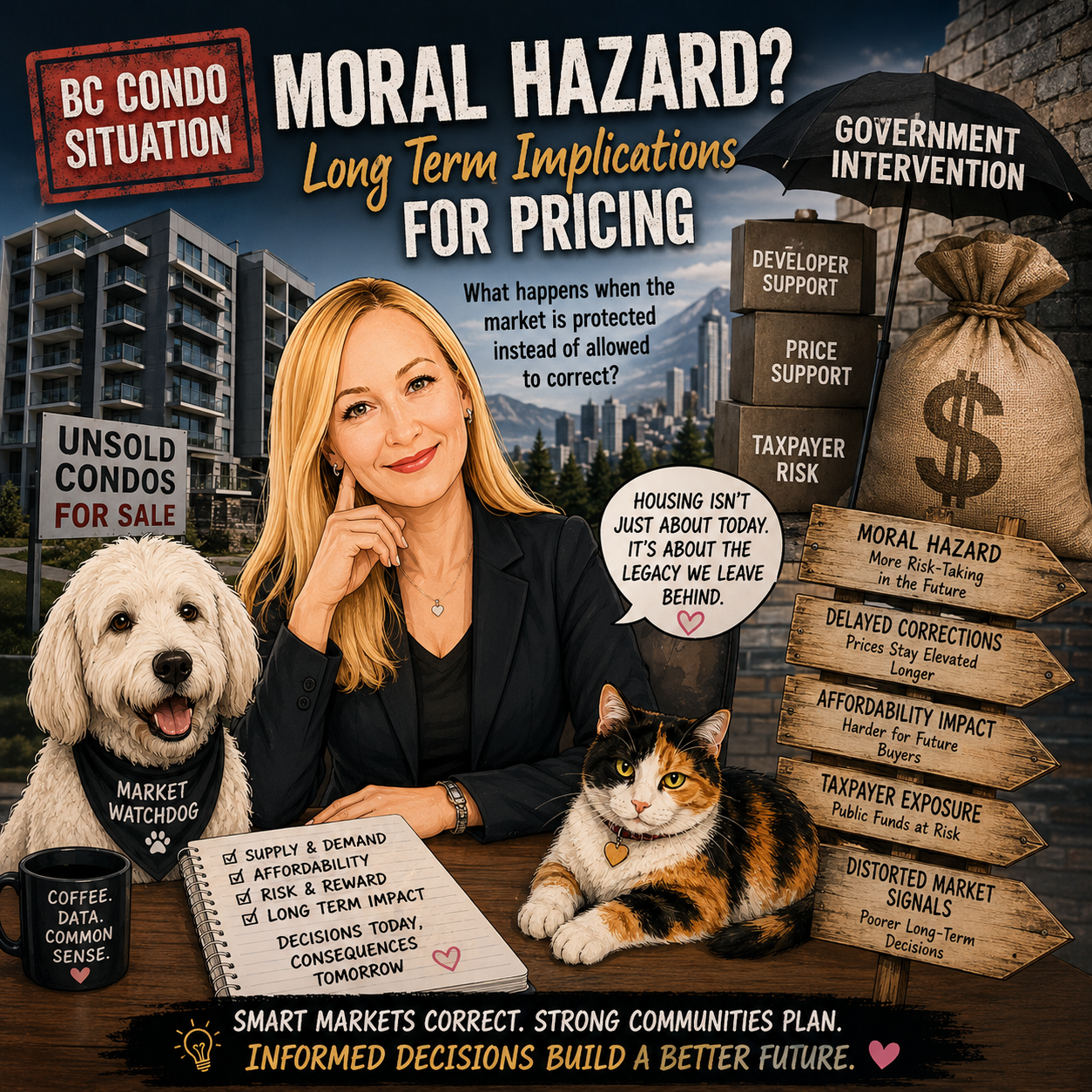
The B.C. and federal governments recently announced a housing initiative that would see up to $1.45 billion used to purchase approximately 2,200 unsold condominium units in high-growth areas of British Columbia. The goal is to convert these homes into affordable rental and rent-to-own housing rather than allowing them to sit vacant.
Supporters argue it’s a practical way to add affordable housing quickly. Instead of waiting years to build new homes, government can purchase units that already exist and put them into use.
Critics, however, see it differently. They argue that by purchasing unsold inventory, government is stepping in before the market has had a chance to naturally adjust. Instead of allowing prices to find their true market value, they believe the program could support prices that otherwise might have fallen.
As someone who watches housing markets every day, I think this raises an important conversation.
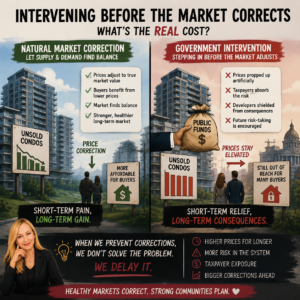
Market corrections aren’t always pleasant. They can be difficult for homeowners, investors, and developers alike. But corrections also serve a purpose. They allow prices to realign with what buyers can actually afford, and they send important signals about supply, demand, and risk.
When corrections are repeatedly softened or prevented through government intervention, there can be unintended consequences.
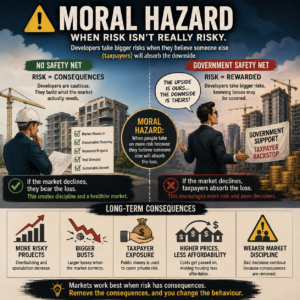
Developers may become more willing to take on risk if they believe future downturns will also be supported. Economists call this moral hazard—when people change their behaviour because they expect someone else will absorb part of the risk.
Another concern is affordability itself. If prices are prevented from adjusting to market conditions, homes may remain out of reach for many first-time buyers. While existing owners may appreciate stable values, younger families trying to enter the market could face even greater barriers.
There’s also the question of taxpayer risk. When governments purchase private developments, taxpayers assume some of the financial exposure that would otherwise remain with private investors. Whether that’s good public policy depends on how those purchases are structured, what price is paid, and whether the homes provide long-term value to the public.
None of this means government should never intervene. There are times when strategic intervention can help increase housing supply or prevent broader economic disruption.
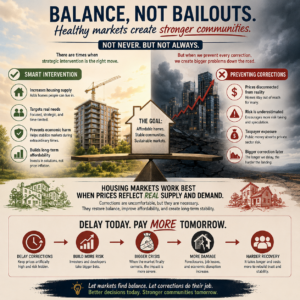
But housing markets work best when prices reflect real supply and demand. Corrections, while uncomfortable, are part of that process. If we prevent every correction, we risk creating a market where prices become increasingly disconnected from affordability, risk is underestimated, and the next correction has the potential to be even more severe.
I’m Diana Klejne with Stonehaus Realty in Creston, BC. My goal isn’t to tell you what to think—it’s to help you understand the market forces shaping housing in British Columbia, so you can make informed real estate decisions.
Are you seeking a more sustainable life? Check out my Buyer’s Knowledge Centre
Are you thinking of Selling? Check out my Seller’s Knowledge Centre
Diana Klejne Personal Real Estate Corporation Stonehaus Realty Corp
 604-789-8202
 DianaKlejne@Gmail.com