Before You Pull Out the Garden, Save These Seeds
By the end of the growing season, it is easy to look at tired plants and see only garden cleanup. But once you begin looking more closely, you realize how much of next year’s garden may already be sitting right in front of you.
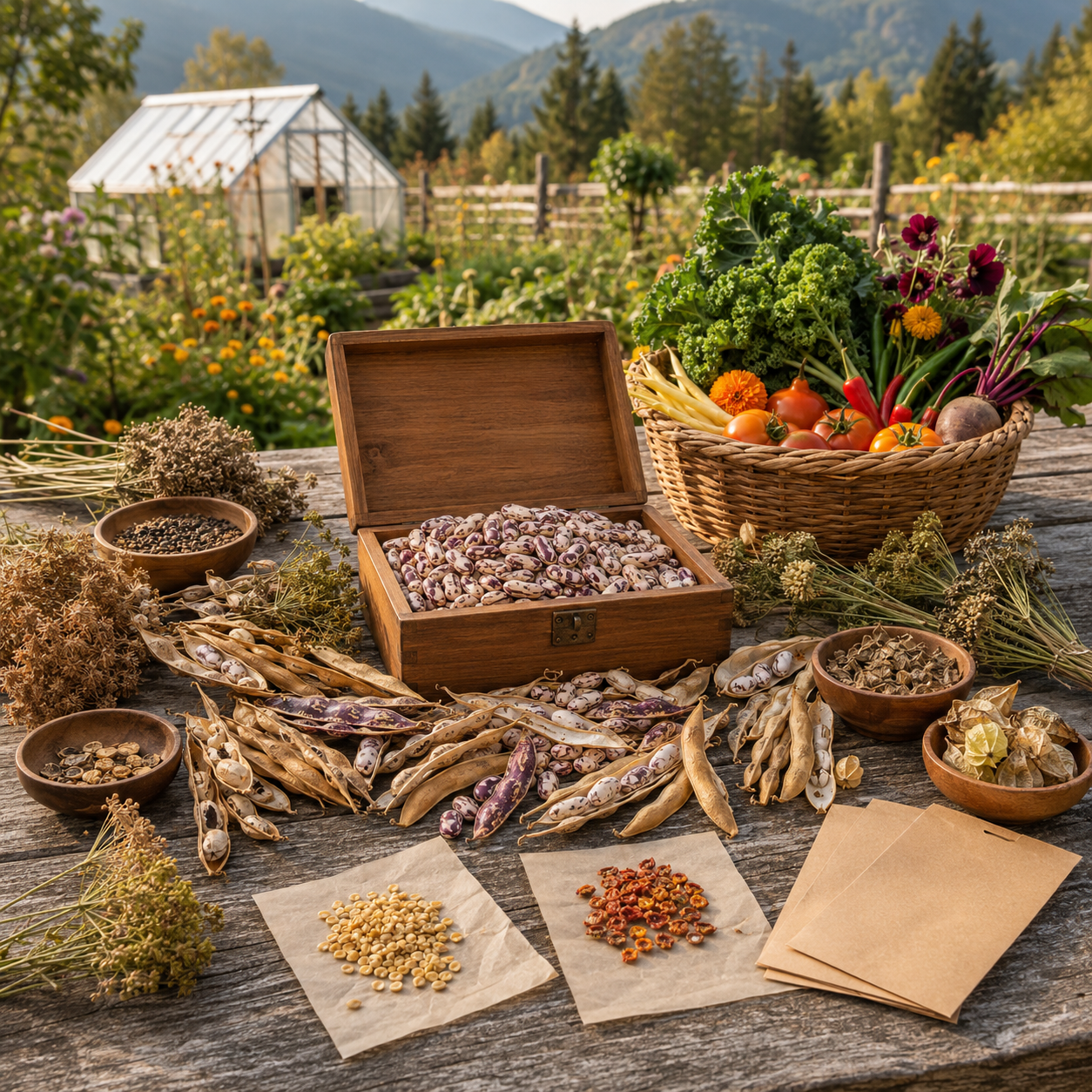
I recently walked through our garden to see which seeds we could save. We collected from kale, mustard greens, tomatoes, peppers, onions, garden sorrel, carrots, calendula, hollyhocks, ground cherries, beans, beets and as many flowers as possible.
Some seeds are easy to recognize and collect, while others require a little more patience or preparation. Beans can be left to mature and dry in their pods, flowers form seed heads as their blooms fade, and many vegetables need to remain in the garden longer than they would if we were harvesting them to eat.
I am still learning as I go, and that is part of what makes seed saving so interesting. It allows us to take a little of what the garden produced this year and carry it forward into the next growing season.
When Seeds Carry a Family Story
Over time, saving seeds from plants that perform particularly well in our own soil and growing conditions can help preserve varieties that might otherwise disappear.
I learned just how important that can be with a special variety of bean my aunt originally sent me from Poland. When bugs devastated the plants, I was heartbroken because I thought I might have lost that family strain completely. Thankfully, my aunt was able to send me more seeds—but it was a powerful reminder that some seeds carry far more than next year’s crop. They can carry family history, memories and varieties that may be difficult or impossible to replace.
I talked about the pill bugs and other unexpected garden problems we encountered in my mulching video:
Watch Why Mulching Isn’t Working in My Garden
What Will You Do With All Those Seeds?
Most gardeners will eventually collect far more seeds than they can plant themselves—and that creates another kind of opportunity.
Share them with a neighbour. Trade varieties with another gardener. Give some to a friend who wants to grow food for the first time. Swap seeds for something you have never grown before, or pass along a variety that performed especially well in your area.
Seed saving is not only about reducing what you need to purchase next spring. It is also a practical way to preserve special varieties, exchange knowledge and help more people grow food within their own communities.
In my latest video, I take you into the garden and show you the vegetables, herbs and flowers we are collecting seeds from this year.
Grow what you can. Save what you can. Share what you have.
Watch Before You Pull Your Garden Out, Save These Seeds
If you enjoy practical conversations about gardening, acreage living and becoming more self-sufficient, please like the video and subscribe to the Wealthy Acre channel.
Happy gardening!
Diana Klejne Personal Real Estate Corporation – Stonehaus Realty Corp.
604-789-8202 | DianaKlejne@gmail.com