Buy Land That Pays: Could Your Acreage Generate Income?
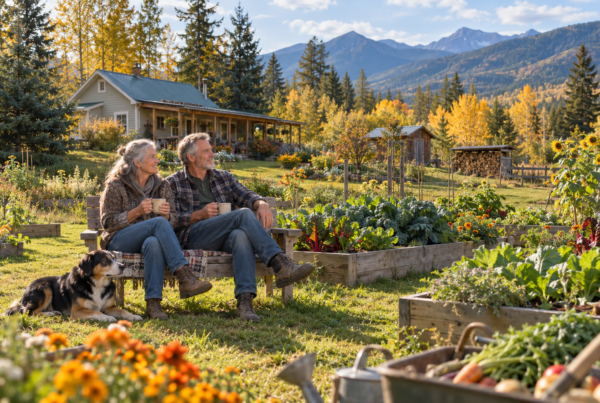
For many people, buying an acreage is about creating a better lifestyle—more space, greater independence and the freedom to build something of their own. But what if the right property could also generate income, help cover its operating costs or provide the foundation for a business right outside your door?
The biggest mistake may be buying the property first and then trying to force a business onto it. A beautiful acreage is not automatically suitable for a market garden, campground, horse-boarding operation or home-based trade. It is better to consider what you may want to build first, then search for land with the zoning, water, access and infrastructure to support it.
Look Beyond the Obvious
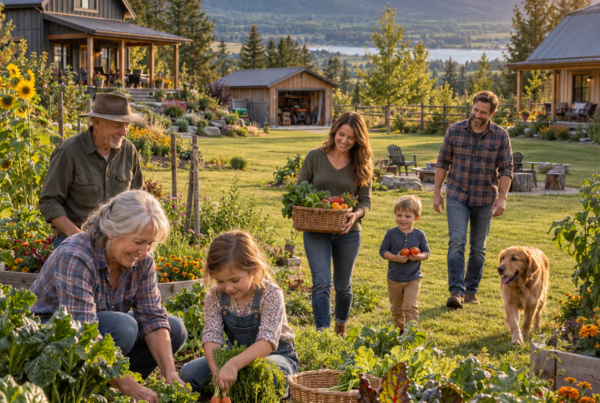
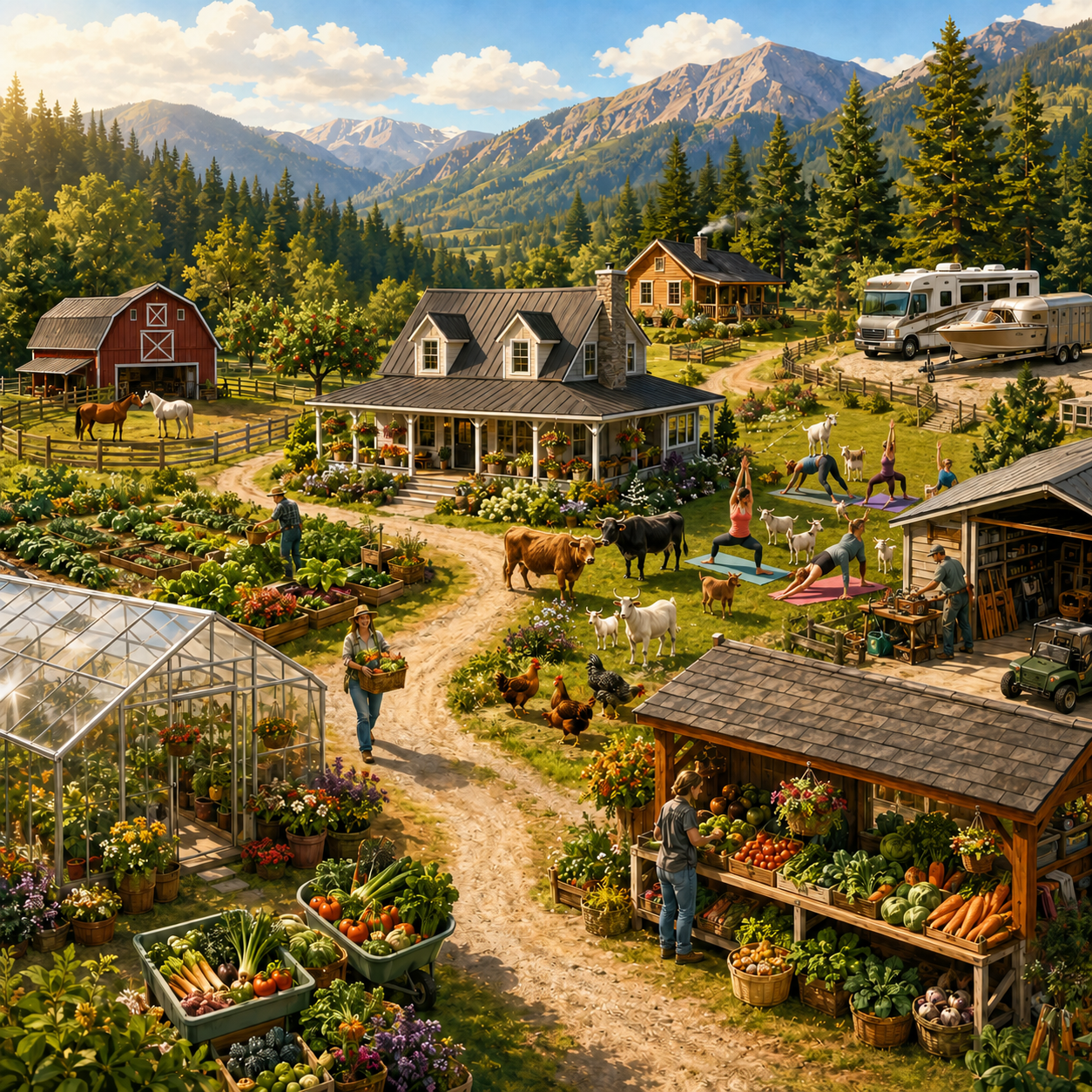
Growing vegetables, berries, fruit, herbs or flowers can create opportunities for farmers’ markets, roadside stands, local delivery and seasonal subscription boxes. But the larger opportunity may be what you build around your products. A CSA box (Community Supported Agriculture subscription), for example, does not necessarily have to contain only what you grow. By partnering with nearby producers, it could also include eggs, bread, mushrooms, preserves or other locally made products.
Acreage can also generate income by offering an experience rather than a product. Cabins, farm stays, campsites, workshops, U-pick events and seasonal attractions are only a few possibilities. A treed property that is unsuitable for farming could be ideal for private campsites near a popular travel route. By partnering with local restaurants, wineries, farms or guides, you are no longer selling one night’s accommodation—you are selling an entire Kootenay experience
The Land Doesn’t Have to Be the Business
Sometimes the property simply gives you somewhere to operate your own business. A mechanic, welder, woodworker, equipment-repair operator or tradesperson may not need 20 acres of farmland. Two acres with a quality shop, sufficient electrical service, storage, parking and good road access could be far more valuable.
Horse boarding, livestock, nursery stock, firewood, pasture leases and even RV or equipment storage may also create income. Not every idea needs to become a six-figure company. If boarding a few horses helps pay for your own arena, fencing and hay, the property is still helping support the lifestyle you wanted.
When the “Cheap” Property Costs More
A lower purchase price does not always mean better value. An inexpensive acreage may still need fencing, irrigation, a shop, power upgrades, septic improvements, drainage, land clearing, roads, parking and storage. Another property may cost more but already have the infrastructure required to begin operating.
Before deciding which property is the better investment, compare the total cost of making each one suitable for your plans—not just the purchase price. It may even be more practical to buy an established orchard, nursery, campground, farm stand or equestrian facility than to spend years rebuilding the same infrastructure from bare land.
Start With the Right Questions
Before purchasing an acreage with income potential, find out whether the proposed use is permitted, whether the water supply can support it and how much of the land is genuinely usable. Consider year-round access, customer parking, trailer turnaround, septic capacity, electrical service, storage and proximity to the people or businesses you intend to serve.
These are only a few of the possibilities explored in my full Buy Land That Pays video. I share income ideas ranging from agriculture and livestock to tourism, storage and home-based trades, along with the property features I would look for and several overlooked ways to build more value around each opportunity.
Don’t buy the property and hope your idea will fit. Decide what you want the land to make possible, then find the property that can support it.
Watch the full Buy Land That Pays video on the Wealthy Acre channel
Business uses are subject to applicable zoning, bylaws, licensing, water rights, insurance and other regulatory requirements. Confirm the requirements for the specific property and intended use before purchasing.
Diana Klejne Personal Real Estate Corporation – Stonehaus Realty Corp.
604-789-8202 | DianaKlejne@gmail.com