Wildfire Evacuation: Are You Actually Ready?
Wildfires have unfortunately become a regular part of summer in Canada. Watching what has happened in communities like Summerland is heartbreaking—and it makes you stop and think about how quickly an ordinary day can turn into an emergency.
If you had only a few hours to evacuate, what would you take? What if you had just 30 minutes—or only 10?
You quickly begin narrowing everything down to what is truly important. People and animals come first. That goes without question. But getting everyone to safety may not be as simple as opening the vehicle doors and leaving.
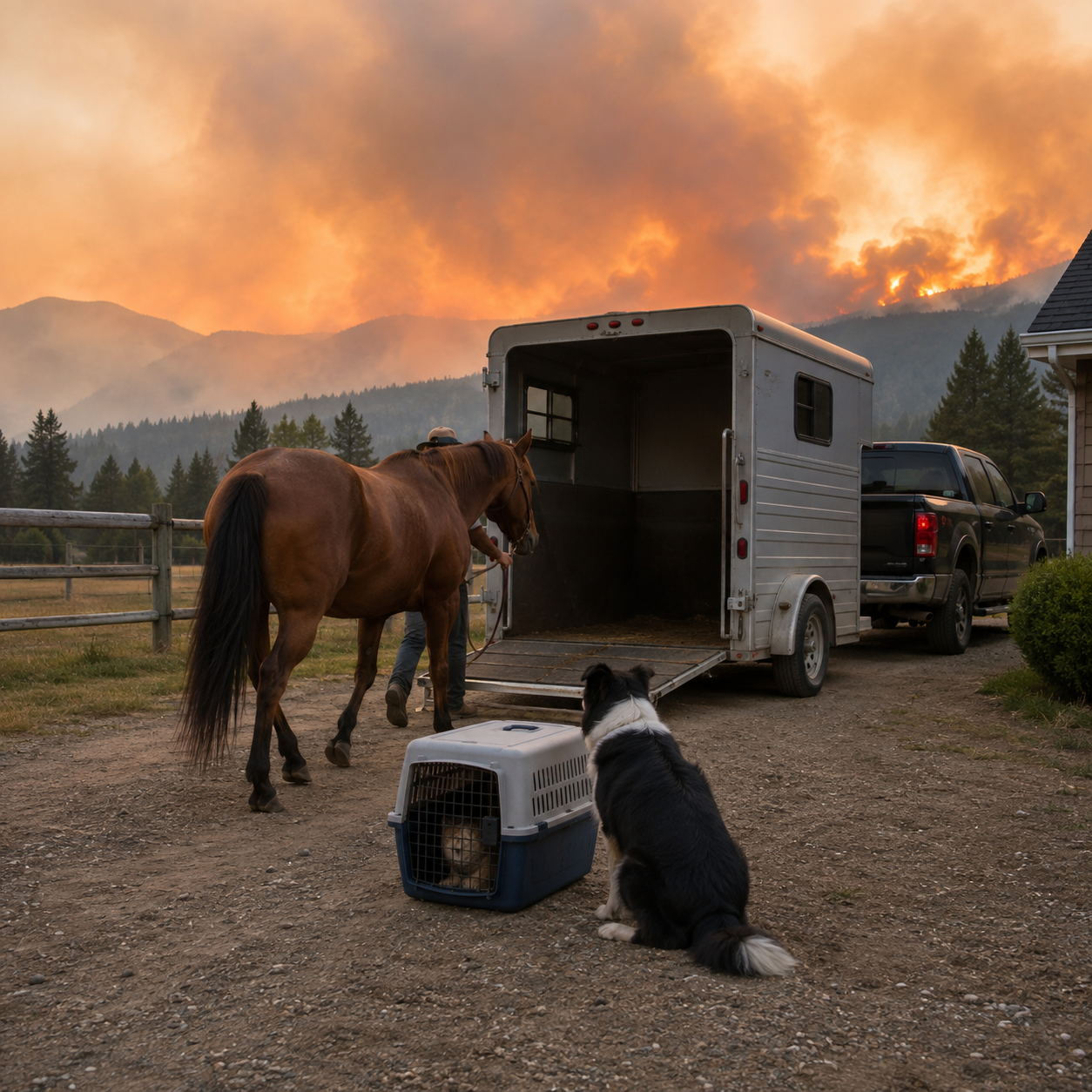
For Diana, this is a very real concern. She has four horses and a two-horse trailer. Like many rural property owners, she has had to think seriously about what would happen if there wasn’t enough time or transportation to move every animal at once.
During past wildfires, some owners have been unable to evacuate all their horses and have had to set them free. Afterwards, they turned to social media, posting photographs and searching for animals scattered during the emergency. It is an unimaginable situation—but also an important reminder that these difficult decisions need to be considered before an evacuation order is issued.
In her latest Wealthy Acre video, Diana shares practical questions every household—and especially every rural property owner—should be asking.
Would You Know What to Do?
The time to figure out an evacuation plan isn’t when you’re being evacuated. Being prepared means knowing:
- The difference between an Evacuation Alert and an Evacuation Order
- Where official local emergency updates are published
- The correct number to call if you spot a wildfire
- Where you will go if you’re evacuated
- More than one route out of your area
- Who will help if you aren’t home when an order is issued
- How your pets, horses or livestock will be transported
- What you will take if you have 10 minutes, 30 minutes or up to 24 hours
Diana discusses why every household should have more than one destination in mind. Family or friends may be your first choice, but what if that route is closed? Will a hotel, campground or emergency reception centre accept your animals? Where will everyone meet if family members are separated?
She also talks about practical details that are easy to overlook: keeping vehicles fuelled or charged, making sure everyone knows where the keys are, downloading offline maps and keeping trailers maintained, accessible and ready to move.
What—and Who—Are You Preparing For?
A bug-out bag is an important starting point, but an evacuation plan needs to go beyond packing clothing and toiletries. Medications, identification, insurance information, charging cables, emergency contacts, food, water and masks for smoke may all be needed.
There are also the things that cannot be replaced: family photographs, hard drives, jewellery, heirlooms and meaningful personal items. If you had only 15 minutes, would you know exactly where they were?
Diana also explains why photographing or scanning important documents can save considerable stress later. A video inventory of your home, shop, barn, equipment and other major possessions may be extremely helpful if you ever need to make an insurance claim.
Animals Need Their Own Evacuation Plan
Pets need accessible carriers, leashes, food, water, medication and current identification. Horses require an even more detailed plan.
Is your trailer ready and easy to access? Do your horses load willingly? Do you know who nearby has another trailer? Where could your horses stay? Do you have recent photographs, identification information, halters and lead ropes organized?
Chickens, ducks and other livestock can’t be forgotten either. How many crates would you need, where are they stored and where would the animals go?
Perhaps the most important question is this: What happens if an evacuation order is issued while you are away from home?
Someone you trust should know where the carriers, halters, leads and emergency instructions are located. They may also need access to your property and a clear understanding of where your animals should be taken.
Prepared, Not Fearful
This isn’t about living in fear or assuming your home will be affected by wildfire. It is about making the hardest decisions while you have time to think clearly.
Even when a wildfire isn’t in your immediate area, power, roads, cell service and other essential services may be disrupted. Knowing what you will do—and who you can call—can make an enormous difference.
Watch Wildfire Evacuation: Are You Actually Ready? for Diana’s complete discussion and practical advice.
If you find the video helpful, please give it a like and subscribe to The Wealthy Acre for more honest, practical conversations about rural living, acreages and the things property owners need to know.
Don’t prepare because you believe your home is going to burn. Prepare so that if you are ever told to leave, the hardest decisions have already been made.
Official Creston and Area Resources
1. Voyent Alert! — most important local signup
The RDCK uses Voyent Alert! to notify residents and visitors by app, text message, email or telephone. You can register more than one location, which is useful for your home, workplace, family members’ properties or livestock locations.
Register for RDCK Voyent Alert!
2. RDCK Emergency Information
The RDCK is the primary source for evacuation alerts, evacuation orders, rescinds, emergency maps and local instructions affecting Creston Valley’s rural areas.
RDCK Emergency Information
RDCK Emergency Operations Centre public inquiry line:
250-352-7701
This line is particularly useful when the Emergency Operations Centre is activated. It should not replace 911 for an immediate life-threatening emergency.
3. Town of Creston Wildfire Information
The Town’s wildfire page provides locally relevant preparedness information and links to current wildfire resources.
Town of Creston Wildfire Information
4. BC Wildfire Service
The BC Wildfire Service website and mobile app show active fires, fire size and status, evacuation information, prohibitions and current wildfire conditions.
BC Wildfire Service Map and Dashboard
To report a wildfire or unsafe activity that could cause one:
- 1-800-663-5555
- *5555 from a cellphone
- Or use the Report a Fire feature in the BC Wildfire Service app.
If people keep only one wildfire number in their phones, it should be *5555. The province confirms that reports can include photographs and location information through the app. BC government wildfire guidance
5. EmergencyInfoBC
EmergencyInfoBC collects official evacuation alerts and orders from local governments and First Nations across the province. It is especially helpful if an emergency affects more than one regional district.
EmergencyInfoBC
6. DriveBC
Use DriveBC for official highway closures, delays, alternate routes and highway-camera images. Do not rely on Google Maps alone during an evacuation because emergency closures can change quickly.
DriveBC
7. Emergency Support Services
Residents can create a profile in advance through B.C.’s Evacuee Registration and Assistance tool. If evacuated, this can help people access temporary lodging, food, clothing and other essential support.
Emergency Support Services Registration
Pre-registering does not mean you expect to evacuate. It simply means less information may need to be entered during an already stressful situation.
8. PreparedBC
PreparedBC provides reliable emergency-plan templates, grab-and-go bag lists and advice for preparing children, pets and households.
PreparedBC
ts emergency-planning information also points residents with pet-related evacuation needs to the BC SPCA Animal Helpline: 1-855-622-7722. PreparedBC emergency planning
9. FireSmart BC
FireSmart BC explains what property owners can do before wildfire season to reduce risks around homes, shops, barns and other structures.
FireSmart BC
10. Smoke, Weather and Power Disruptions
- Environment Canada’s Creston forecast and warnings
- B.C. Air Quality Health Index
- FortisBC outage map
- FortisBC electricity emergency/outage line: 1-866-436-7847
Diana Klejne Personal Real Estate Corporation
Stonehaus Realty Corp. 604-789-8202
 DianaKlejne@Gmail.com